News
Cleanroom Standards for Pharmaceutical Use in Hospitals: How Air Pressure Control Prevents Contamination?
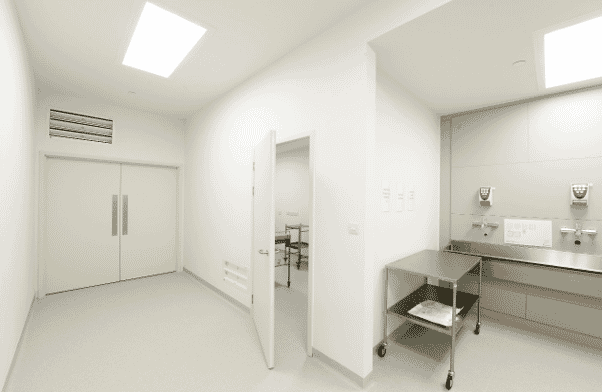
Although they’re not visible to the naked eye, bacteria and viruses are all around us, so preserving sterile conditions in hospitals where medicines are prepared daily requires significant thought. Whether it’s an aseptic compound unit or a cytotoxic preparation area, maintaining sterility is vital for patient safety. Without it, microorganisms end up where they shouldn’t be, and the risk of infection and illness is all too real.
This is where cleanroom standards for pharmaceutical use come into play. These standards define how environments should be controlled to prevent contamination and ensure medicines are prepared safely. Air pressure control plays a huge part in this, influencing the flow of contaminants both in and out of rooms.
Understanding Pharmaceutical Cleanroom Standards
Pharmaceutical cleanrooms in hospitals are governed by strict regulatory frameworks, including EU GMP Annex 1:2022. These standards are designed to ensure that sterile medicinal products are prepared in controlled environments that minimise contamination risk.
Cleanrooms are classified into grades, ranging from Grade A (the cleanest) through to Grade D. In hospital settings, you’ll often see Grade A environments located within Grade B rooms, creating a layered approach to contamination control.
This structure ensures that the most critical processes take place in the cleanest possible conditions, supported by surrounding environments that maintain progressively lower cleanliness levels. However, classification alone isn’t sufficient. The way air moves between these spaces is what truly protects against contamination.
The Importance of Pressure Cascades
A fundamental requirement within pharmaceutical cleanroom solutions is the use of pressure cascades, which maintain airflow from cleaner areas to adjacent lower grade areas. In practice, this means that higher-grade cleanrooms are maintained at a slightly higher pressure than adjacent spaces.
When doors are opened, air flows outward from the cleanroom, preventing contaminants from entering. Without this controlled airflow, there is a risk that particles from corridors, preparation areas or support spaces could migrate into critical zones. Maintaining a stable pressure cascade ensures that even during routine activity, contamination risks are kept to a minimum.
Sustaining Pressure Differentials in Practice
To achieve effective pressure cascades, cleanrooms typically operate with pressure differentials of around 10–15 Pa between adjacent areas. It’s not a particularly noticeable change in pressure but keeping it within the correct range is paramount. Even slight deviations can disrupt airflow direction and allow harmful microbes into the cleanroom environment.
Air pressure stabilisers, however, automatically adjust to changes within the space, such as when a door is opened, staff move around or equipment is in operation, to maintain the required pressure differential. Modern systems are designed to react quickly and precisely, ensuring that pressure cascades remain stable even in fast-paced and busy hospital environments.
Monitoring and Compliance Requirements
Maintaining pressure is only part of the requirement – cleanroom standards also demand continuous monitoring and verification alongside compliant, auditable documentation. Differential pressure monitoring systems are used to track pressure levels between rooms in real time. These systems often include visual displays and alarm functions to alert staff if pressure falls outside acceptable limits.
To remain compliant when a deviation occurs, it must be detected immediately, logged accurately and investigated in line with good manufacturing practice requirements. Having this level of oversight in place from the outset ensures any potential risks in your facility are identified and addressed before they impact product quality or patient safety.
The Role of Air Pressure Control in Contamination Prevention
By ensuring that air consistently moves from cleaner areas to adjacent lower grade areas, pressure cascades act as a barrier against contamination. This is particularly important in environments where sterile products are prepared, as even microscopic particles can compromise safety. In hospital cleanrooms, especially where workflows are often fast-paced and complex, and the products being mixed or produced are often destined for vulnerable and very sick patients, this level of cleanliness is a must.
Effective Pharmaceutical Cleanroom Solutions with Apreco
Apreco’s air pressure stabilisers are designed to meet pharmaceutical cleanroom standards in hospital environments. Our APSX stabilisers provide precise control across a range of 3–50 Pa, with a setting accuracy of +/- 1 Pa over the operating range. This level of precision helps maintain stable pressure cascades, even in challenging conditions.
Manufactured to meet the ISO 9001:2015 quality management system, these solutions are built for reliability and consistency. In addition, we offer fire-rated and combined smoke/fire-rated options, ensuring that pressure control systems also meet fire strategy requirements within healthcare facilities.
Building Controlled Environments that Truly Protect Patients
Cleanroom standards for pharmaceutical use exist for one reason: to ensure that every medicine prepared in a hospital setting is safe, sterile and fit for the patients who depend on it. Meeting those standards consistently requires more than compliant equipment, it requires a pressure control strategy that performs reliably under real working conditions, every single day.
Achieving that level of reliability is far easier when you work with engineers who understand both the regulatory requirements and the practical demands of hospital pharmaceutical environments. Whether you are designing a new aseptic unit, upgrading an existing facility or reviewing your current pressure control systems. Apreco’s team can support you from initial assessment through to installation and ongoing maintenance.
We provide calculation support, product selection guidance, compliance documentation and servicing, everything you need to maintain stable pressure cascades and keep your cleanroom performing as it should. Speak to our technical team today to discuss your facility’s requirements and find out how we can help you maintain the standards your patients deserve.
Article tags
Air Pressure StabilisersRecent blog articles

News
What Is A Negative Pressure Isolation Room?
Preventing infection is of fundamental importance in hospital settings to protect both patients and clinical staff. Certain infectious diseases spread…
Read article
News
Ventilation Guidelines for Healthcare Facilities: Meeting HTM 03-01 and HBN 04-01
In healthcare environments, airflow is a critical part of infection control, contamination prevention, and patient safety. From operating theatres to…
Read article
News
The Cost of Data Centre Downtime in 2026
In 2026, Data Centres are no longer just part of the infrastructure, they are the infrastructure. From financial services and…
Read article