News
Data Centre Airflow Management: Why Pressure Control Matters?
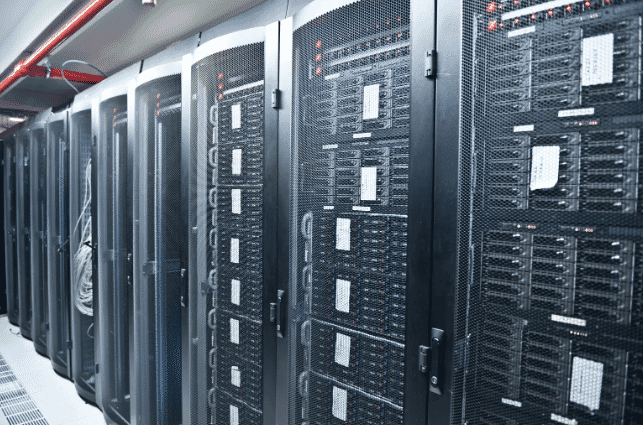
When you’re responsible for managing a Data Centre, your focus is primarily on the data rather than airflow, but efficient airflow is an essential part of keeping performance optimal and controlling costs. Even with advanced cooling systems in place, poor airflow management can undermine their effectiveness.
That’s why data centre airflow management needs to go hand in hand with pressure control. By understanding how air moves through your space and managing it precisely, you can significantly improve cooling performance, reduce energy waste and avoid issues caused by pressure imbalance.
Maintaining Clean and Controlled Environments
Pressure control also plays an important role in keeping your Data Centre free from contaminants. By maintaining the correct pressure differentials, air flows away from clean areas rather than into them, preventing dust, dirt and debris from entering sensitive spaces and compromising equipment.
This controlled airflow also supports stable environmental conditions, reducing the risk of humidity fluctuations and ensuring a more consistent operating environment across the facility.
Addressing Everyday Airflow Challenges
Airflow imbalances often make themselves known during or after commissioning, which can be costly to resolve. Doors that are difficult to open or close are a common indicator of positive or negative pressure.. While it may seem like a minor inconvenience, it is usually a sign that air pressure is not being properly managed throughout the space and can lead to reduced energy efficiency.
Air pressure stabilisers address this directly by maintaining consistent pressure levels, ensuring doors operate smoothly and airflow remains stable. Importantly, they resolve the root cause of the problem rather than the symptoms alone.
Understanding Airflow and Pressure in your Data Centre
Data centres generate an enormous amount of heat that must be continuously managed to protect equipment. Effective cooling is a result of moving air in a controlled way andensuring cold air reaches server intakes while hot air is removed quickly and efficiently. When these two air streams mix, temperatures rise and cooling systems become less effective.
This is where differential air pressure management becomes essential. Air naturally moves from areas of higher pressure to lower pressure, so by creating controlled pressure differentials, you can prevent cold and hot air from mixing, eliminate bypass air and direct airflow exactly where it needs to go.
In a well-balanced environment, even very small pressure differences have a significant impact. Precise control down to levels as low as 3 Pa is often sufficient to stabilise airflow and prevent inefficiencies such as bypass air or recirculation. Without this level of control, air takes the path of least resistance, escaping through gaps, leaking around containment or circulating in ways that reduce cooling efficiency.
Preventing Hotspots and Improving Cooling Performance
One of the most common problems in any data centre is hot air re-entering the cold aisle. When this happens, cooling systems must work harder to compensate, increasing energy use and placing additional stress on equipment.
Getting the pressure balance right ensures that cold and hot air remain separated. Cold air is directed towards your equipment, while hot and humid air flows to extraction points as intended, meaning your cooling systems perform as they are designed to. This creates a more stable environment and reduces the likelihood of hotspots and humidity spikes forming across your racks. Consistent temperature and humidity levels are essential for protecting sensitive equipment and ensuring long-term reliability.
Reducing Energy Waste and Improving Efficiency
Cooling accounts for a significant portion of a data centre’s energy usage. If conditioned air is escaping or being misdirected, you are losing efficiency and increasing operational costs..
By stabilising air pressure, you ensure that cooled air is delivered where it is needed rather than being lost through gaps or unused spaces. This allows your cooling systems to operate more efficiently, reducing the need for overcompensation and lowering overall energy consumption. Over time, even small improvements in airflow control lead to noticeable cost savings, particularly in larger or high-density environments.
Supporting Containment and Long-Term Performance
Hot and cold aisle containment systems rely on stable pressure conditions to function effectively. Without proper pressure control, even well-designed containment can underperform and fail to deliver the separation it was intended to provide.
Combining air pressure stabilisers, including fire and smoke-rated options, where required with dedicated pressure relief vents gives containment systems the stable conditions they require to function as designed. This integrated approach delivers consistent, reliable cooling performance across the facility and reduces the risk of long-term inefficiencies developing over time.
Get The Right Solution for Your Facility
Effective data centre airflow management starts with understanding how air behaves within your specific environment and controlling it with precision. When pressure is properly factored into your airflow strategy, the results are measurable: improved cooling efficiency, reduced energy costs, fewer hotspots and a cleaner, more stable operating environment.
Apreco designs and manufactures air pressure stabilisers and pressure relief vents for critical environments and we are the only supplier offering both in a single, integrated range, meaning you can address every airflow challenge without coordinating between multiple suppliers. Our solutions deliver consistent, reliable performance down to 3 Pa, covering both fire suppression pressure events and everyday HVAC-driven imbalances. Apreco products are independently tested and certified, manufactured in the UK with high stock levels and short lead times, and are available in bespoke colours to meet project specifications.
Equally important, our expert engineers work with you to solve your specific airflow challenges, not just supply products. From initial system design and sizing calculations through to commissioning and ongoing maintenance, our team provides honest, technically accurate guidance at every stage. Contact Us to find out how air pressure stabilisers and pressure relief vents can improve airflow and performance in your facility.
Image Source: Canva
Article tags
Data Centre Airflow ManagementRecent blog articles

News
What Is A Negative Pressure Isolation Room?
Preventing infection is of fundamental importance in hospital settings to protect both patients and clinical staff. Certain infectious diseases spread…
Read article
News
Ventilation Guidelines for Healthcare Facilities: Meeting HTM 03-01 and HBN 04-01
In healthcare environments, airflow is a critical part of infection control, contamination prevention, and patient safety. From operating theatres to…
Read article
News
The Cost of Data Centre Downtime in 2026
In 2026, Data Centres are no longer just part of the infrastructure, they are the infrastructure. From financial services and…
Read article