News
Ventilation Guidelines for Healthcare Facilities: Meeting HTM 03-01 and HBN 04-01
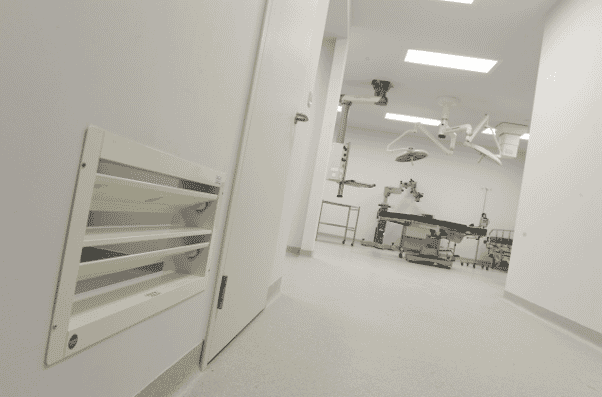
In healthcare environments, airflow is a critical part of infection control, contamination prevention, and patient safety.
From operating theatres to isolation rooms, maintaining the correct airflow and pressure is critical to protecting both patients and staff.
In the UK, ventilation guidelines for healthcare facilities are primarily defined by two key documents: HTM 03-01 and HBN 04-01. Together, they set out how healthcare spaces should be designed and managed to ensure safe, controlled environments.
If you work in healthcare facility design, then understanding how these guidelines work and how to implement them in practice is essential.
Why Pressure Control is Important in Healthcare Settings
Air pressure plays a vital part in infection prevention. By controlling how air moves between spaces, healthcare facilities can reduce the risk of airborne contaminants spreading.
Positive pressure environments, such as operating theatres, are designed to keep contaminants out by ensuring that air flows outwards when doors are opened. Conversely, negative or neutral pressure spaces are used to contain potentially infectious particles within a controlled area.
HTM 03-01 and Operating Theatre Ventilation
HTM 03-01 sets out the requirements for specialised ventilation in healthcare premises, including operating theatres and clean environments.
One of its key principles is maintaining positive pressurisation within operating theatres. This ensures that when doors are opened, air flows out of the theatre rather than allowing unfiltered air to enter.
This outward airflow helps maintain a sterile environment, reducing the risk of surgical site and systemic infections. However, maintaining this pressure consistently is not always straightforward. Door openings, staff movement, and equipment changes can all cause fluctuations.
HBN 04-01 and Isolation Room Requirements
HBN 04-01 Supplement 1 focuses on the design of isolation facilities, including rooms used to manage infectious patients. These spaces may use either negative pressure ventilation to contain airborne pathogens, or a neutral pressure room supported by a positive-pressure ventilated lobby (PPVL). The PPVL approach is recommended by HBN 04-01 Supplement 1 as it can serve both infectious and immunocompromised patients, with the lobby acting as a buffer zone that maintains positive pressure relative to both the room and the corridor. These lobbies act as a buffer zone, helping to control airflow when doors are opened. When someone enters or exits an isolation room, pressure conditions can shift rapidly. Without automatic control, this can lead to the unintended movement of airborne contaminants.
To meet HBN 04-01 requirements, systems must be capable of reacting to the change in pressure conditions during these transitions. This ensures that infection control measures remain effective even during routine use.
The Role of Air Pressure Stabilisers
Air pressure stabilisers are a key component in achieving compliance with both HTM 03-01 and HBN 04-01. These systems use advanced control technology to maintain consistent pressure differentials within healthcare spaces.
Typical pressure ranges include:
- Operating theatre suites: a minimum of +10 Pa relative to adjacent spaces, with ultraclean ventilation theatres typically operating at higher positive pressures.
- Negative pressure isolation rooms: -5 to -10 Pa relative to surrounding areas; PPVL lobbies: approximately +10 Pa relative to the corridor.
Holding pressure within these ranges is essential for both safety and compliance. Modern stabilisers, such as those using VARI-centric technology, are designed to deliver precise control across these ranges.
Compliance, Monitoring and Verification
Meeting ventilation guidelines for healthcare facilities also involves proving the systems are performing as required. Both HTM 03-01 and HBN 04-01 emphasise the importance of documentation, monitoring and verification. Facilities must be able to demonstrate that pressure levels are maintained consistently. This often involves:
- Continuous monitoring systems
- Regular validation and testing
- Documented performance data
Third-party verification can also play an important role, providing assurance that systems meet regulatory standards. Without this level of oversight, it can be difficult to confirm compliance or identify issues before they impact safety.
Integrating Fire and Ventilation Requirements
In addition to airflow and pressure control, healthcare facilities must also meet strict fire safety requirements. This means that ventilation systems, including pressure stabilisers, often need to be fire-rated or have combined smoke and fire-rated configurations.
These solutions ensure that while airflow and pressure are managed effectively, fire compartmentation is not compromised.
Staying Compliant with Apreco Solutions
Apreco’s air pressure stabilisers are designed to support healthcare facilities in meeting the requirements of HTM 03-01 and HBN 04-01. Our APSX stabilisers provide accurate, responsive pressure control, helping maintain the required pressure differentials across a range of healthcare environments.
Manufactured in accordance with ISO 9001:2015, these systems are built to deliver consistent performance and reliability. We also provide fire-rated and combined smoke/fire-rated options, ensuring that ventilation solutions align with both airflow and fire safety requirements.
Creating Safer Healthcare Environments
Effective ventilation is fundamental to healthcare design. It protects patients, supports clinical outcomes, and ensures facilities meet the highest standards of safety and compliance. But meeting the requirements of HTM 03-01 and HBN 04-01 is not simply a matter of installing the right equipment — it requires a pressure control strategy that performs reliably under real operating conditions, day in and day out.
Getting this right from the outset is far more straightforward than retrofitting systems that fall short of compliance. Whether you are designing a new facility or reviewing an existing one, working with engineers who understand both the guidance and the practical challenges of implementation makes a significant difference.
Apreco’s engineers work directly with healthcare designers, estates teams and contractors to assess pressure control requirements, support design calculations and recommend the most appropriate solutions for each specific environment. From operating theatres to isolation facilities, we help ensure your ventilation strategy meets HTM 03-01 and HBN 04-01 requirements and continues to do so long after installation. Speak to our technical team today to discuss your project and find out how we can support your compliance strategy, from design through to ongoing maintenance.
Article tags
Healthcare VentilationRecent blog articles

News
What Is A Negative Pressure Isolation Room?
Preventing infection is of fundamental importance in hospital settings to protect both patients and clinical staff. Certain infectious diseases spread…
Read article
News
The Cost of Data Centre Downtime in 2026
In 2026, Data Centres are no longer just part of the infrastructure, they are the infrastructure. From financial services and…
Read article
News
How to Reduce Data Centre Downtime with Air Pressure Management
Data Centres run 24/7 so any downtime will prove immediate and costly, especially if it is unplanned. While attention is…
Read article